
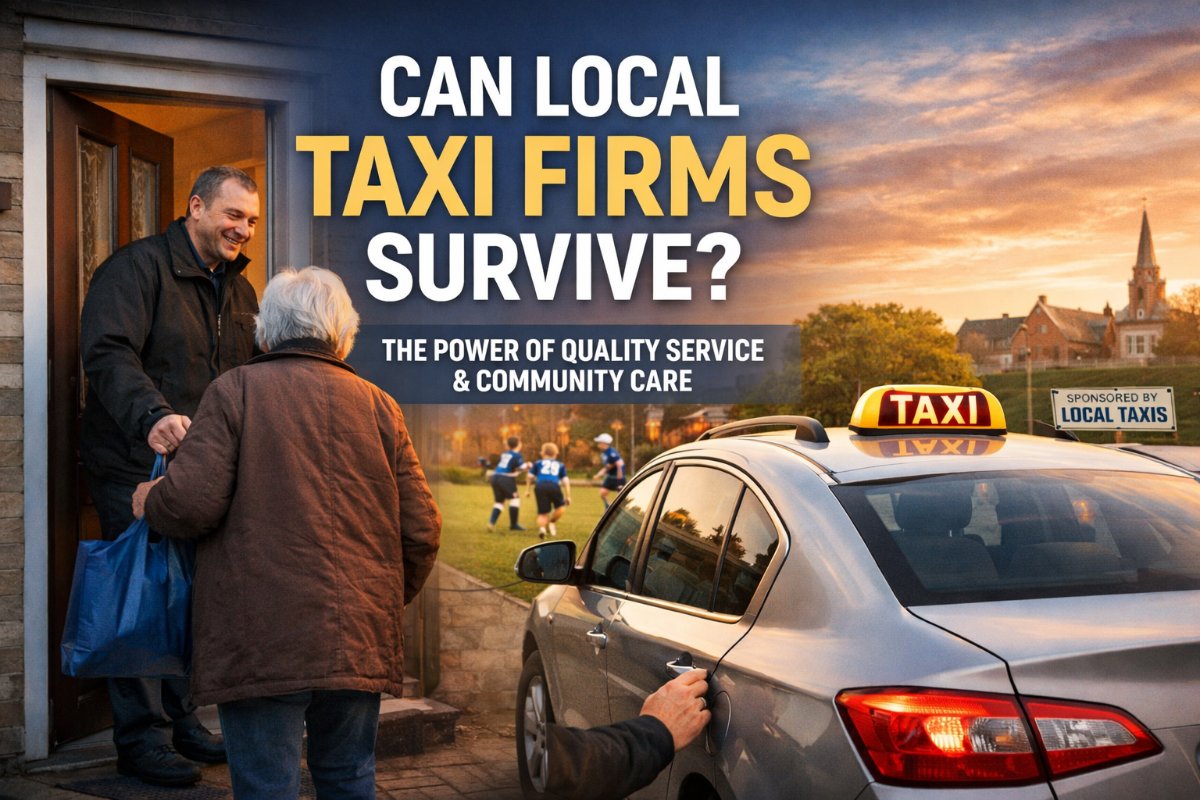
Can local firms survive by going back to basics?
For smaller, local taxi and private hire firms, 2026 may not be about technology wars or price battles. It may be about doing the simple things exceptionally well.
While big apps compete on speed, scale, and algorithms, local firms still have something powerful — human service.
And that’s where the opportunity lies.
Customer care as a competitive advantage
In a world of “kerb to kerb” service, rushed pick-ups, and minimal interaction, many customers are quietly craving something better — especially:
- elderly passengers
- disabled passengers
- families
- regular account customers
- people travelling at night
- people who don’t want the stress of app-only support
Local firms that put customer care first can stand out clearly.
That means:
- answering the phone properly
- knowing regular customers by name
- clear communication if a driver is delayed
- taking responsibility when things go wrong
- solving problems instead of deflecting them to an app or FAQ
For many passengers, how they are treated matters just as much as price.
From kerb-to-kerb back to door-to-door
One of the biggest shifts local firms could make in 2026 is returning to true door-to-door service.
Not:
“I’ve arrived, I’m outside.”
But:
- knocking on the door
- helping with bags
- checking the passenger is safely inside at the other end
- assisting elderly or vulnerable customers without being asked
This used to be standard. Now it’s rare — and that makes it valuable again.
For customers:
“They actually look after you.”
For firms:
- loyalty, repeat bookings, and word-of-mouth referrals.
Investing in driver training (not just licensing)
Many local firms already meet the legal minimum. In 2026, the firms that thrive will go further.
Not complicated, expensive courses — but practical, human training, such as:
- customer service basics
- assisting elderly and disabled passengers properly
- communication and patience
- dealing with nervous, upset, or vulnerable customers
- professionalism at pick-up and drop-off
- representing the firm in the community
Drivers are not just drivers — they are the front door of the business.
One bad experience loses a customer.
One great experience can keep them for years.
Being part of the community again
Local firms that survive long-term often share one thing: they feel local.
That can mean:
- supporting local events
- being visible in the community
- working with care homes, schools, clubs, and local businesses
- employing drivers who know the area properly
- being known as “the firm that looks after people”
This kind of trust cannot be built by a national app — but it can be built by a local operator who genuinely shows up.
Quality over quantity
For many smaller firms, the future may not be:
“How do we do more jobs?”
But:
“How do we do fewer jobs better?”
That might mean:
- fewer drivers, but better supported
- fewer bookings, but higher-quality work
- focusing on reliable customers instead of chasing surge pricing
- prioritising safety, care, and professionalism
In 2026, being good may matter more than being big.
Will customers pay for better service?
Some won’t — and that’s okay.
There will always be customers who choose the cheapest option available.
But there is a growing group of passengers who will happily pay a little more for:
- reliability
- safety
- respect
- help at the door
- a human voice when something goes wrong
Local firms don’t need every customer.
They need the right customers.
The takeaway for local firms
The next few years don’t have to mean the end of local taxi firms — but they do mean change.
Technology matters. Compliance matters. Pricing matters.
But service still matters most.
The firms that:
- train their drivers properly
- care about customer experience
- engage with their communities
- go the extra mile instead of the bare minimum
are the firms most likely to still be here — trusted, respected, and busy — well beyond 2026.