
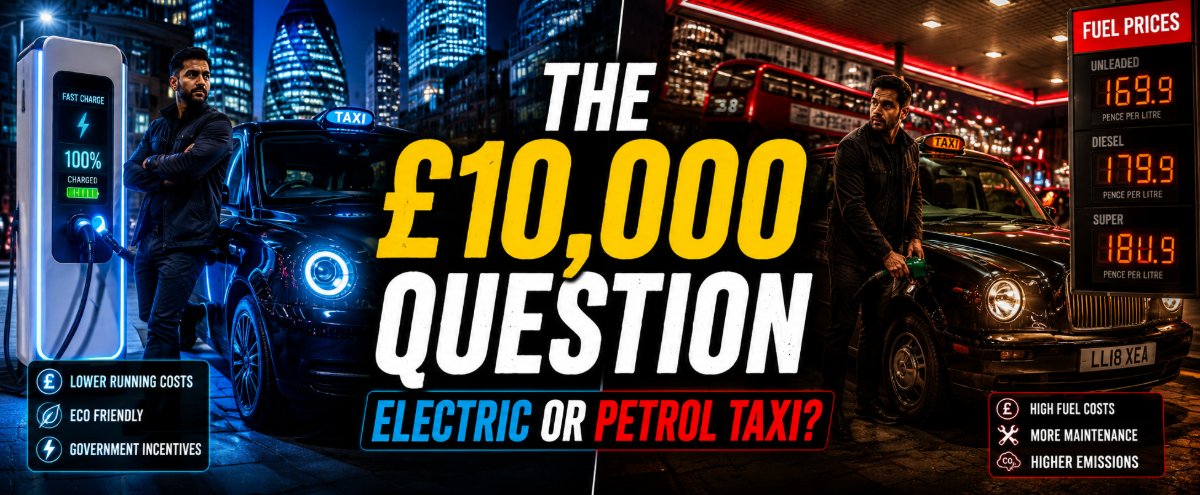
Electric Taxi vs Petrol Taxi in the UK: Which One Makes More Sense in 2026?
The private hire industry in the UK is changing fast. Rising fuel prices, stricter emission rules, and the push toward greener cities have forced drivers to rethink one big question:
Should you drive an electric taxi or stick with petrol?
Let’s break it down in a simple, real-world way.
🚖 The Reality for Taxi Drivers Today
Whether you're driving for Uber, Bolt, or a local minicab firm, your earnings depend on one thing:
Profit = Earnings – Running Costs
And this is where the choice between electric and petrol becomes very important.
⚡ Electric Taxi: The New Money Saver?
Electric taxis (EVs) are becoming more popular in UK cities, especially London.
✔ Advantages of Electric Taxis
- Much lower “fuel” costs (charging instead of petrol)
- Cheaper maintenance (fewer moving parts)
- Quiet and smooth driving experience
- Access to low-emission zones without extra charges
- Better long-term savings
❌ Disadvantages
- Higher upfront cost (buying or renting)
- Charging time and availability issues
- Range limitations depending on model
- Battery degradation over time
⛽ Petrol Taxi: Still the Traditional Choice
Petrol and hybrid taxis are still widely used across the UK.
✔ Advantages of Petrol Taxis
- Lower upfront cost (especially used vehicles)
- Easy refueling anywhere
- No waiting time like charging
- More model choices available
❌ Disadvantages
- High fuel costs (one of the biggest expenses for drivers)
- More frequent maintenance (oil, engine parts, etc.)
- Congestion charges in some cities
- Vulnerable to fuel price increases
📊 Electric vs Petrol: Cost Comparison (Real-World View)
Electric taxis generally have much lower running costs compared to petrol taxis. Charging an electric vehicle is significantly cheaper than refuelling with petrol, especially if the driver charges at home or uses off-peak electricity rates. On average, many drivers report saving around 60% to 80% on “fuel” costs when switching to electric.
Maintenance costs are also usually lower for electric taxis. Since they have fewer moving parts, there is no need for oil changes and fewer engine-related repairs. This can reduce long-term servicing expenses.
However, electric vehicles often come with a higher upfront cost, whether you are buying or renting. Charging time can also be a limitation, especially for drivers who need to stay on the road for long hours without breaks.
Petrol taxis, on the other hand, are cheaper to purchase initially and are easier to refuel quickly at any petrol station. But their running costs are much higher due to fuel prices, and maintenance is generally more frequent and expensive over time.
In simple terms, electric taxis usually cost less to run day-to-day, while petrol taxis are cheaper to start with but more expensive to operate in the long run.
🏙️ What UK Drivers Are Choosing in 2026
In cities like London, more drivers are switching to electric vehicles due to:
- Emission regulations
- Ultra Low Emission Zones (ULEZ)
- Lower running costs over time
However, petrol cars are still common among:
- New drivers entering the industry
- Drivers outside major cities
- Part-time private hire drivers
💡 So Which One Makes More Money?
It depends on how you work:
Electric Taxi wins if:
- You drive full-time
- You can charge cheaply (home/off-peak)
- You do high mileage daily
Petrol Taxi wins if:
- You want low upfront cost
- You drive part-time or irregular hours
- You need maximum flexibility without charging stops
🧠 Final Thoughts
There is no single “best” option—but there is a smarter one depending on your situation.
Electric taxis are shaping the future of private hire driving in the UK, especially in big cities. Petrol taxis are still practical today, but rising fuel costs are making them harder to maximise profit from.
The real question isn’t electric vs petrol anymore—it’s: how do you maximise your profit per mile?