
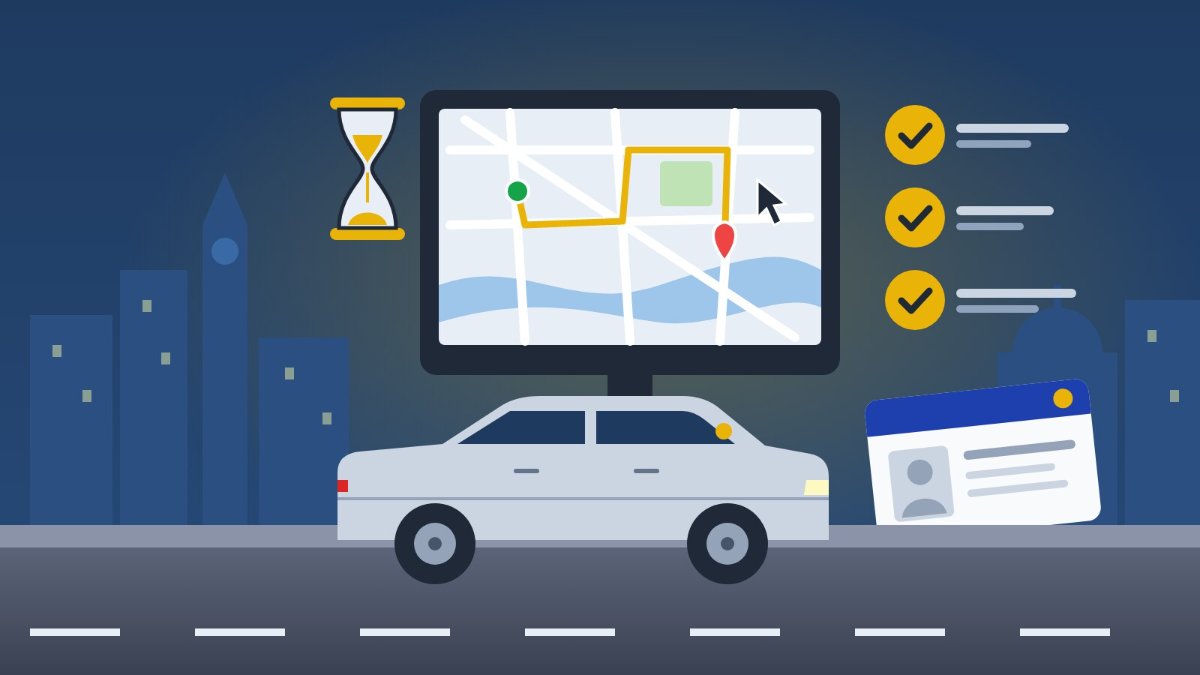
PCO Licence London: How to Get One, Costs and Waiting Times (2026 Guide)
To get a PCO licence (officially a TfL private hire driver licence) you must be at least 21, have held a full driving licence for three years, and pass an enhanced DBS check, a Group 2 medical and three TfL assessments: topographical skills, English speaking and listening, and SERU. The TfL fees alone come to about £460, and you should allow around four months from starting your application to getting your licence.
This guide walks you through each step, what it costs in 2026 and how to avoid the delays that catch most new applicants out.
What is a PCO licence?
"PCO" stands for the Public Carriage Office, the old name for the part of Transport for London (TfL) that licenses taxis and private hire vehicles. The name stuck, so drivers still say "PCO licence" when they mean a London private hire (minicab) driver licence.
It's the licence you need to drive for a London private hire operator, including the big apps. It is not the same as a black cab licence. Black cab (taxi) drivers in London have to pass the Knowledge of London, which takes years. A private hire licence is much quicker to get.
If you're outside London, your local council licenses drivers instead. Our guide on how to become a taxi or private hire driver in the UK covers the rest of the country.
Who can apply?
According to TfL, you must:
- be at least 21 when you apply (there's no upper age limit)
- hold a full driving licence for at least three years: a DVLA licence (category B for a GB licence), a Northern Ireland licence or another EU/EEA licence
- have the right to live and work in the UK
- be "fit and proper", which is what the DBS check and your driving record are used to judge
TfL's updated driver policy (version 6.0, from 1 September 2026) also asks applicants to declare any money they owe TfL, such as unpaid Congestion Charge or ULEZ penalties. One unpaid penalty won't normally stop you being licensed, but repeated non-payment can. Clear anything you owe before you apply.
How to get a PCO licence: step by step
- Create an account and apply online on TfL's licensing website, or email tphlicensing@tfl.gov.uk for a paper pack. You pay the application fee at this stage.
- Do your enhanced DBS check through TfL's chosen provider, and join the DBS Update Service. TfL won't grant a licence until you've registered, and you must keep paying the yearly subscription.
- Get your medical. You must meet the DVLA Group 2 standard (the same as lorry and bus drivers). This is usually done by a doctor who can see your full medical history, often your own GP.
- Complete the online Safeguarding Awareness course. TfL expects you to do this before the SERU assessment.
- Book and pass your three assessments at the TfL driver assessment centre (see below).
- Send any overseas criminal record certificates. If you've lived abroad for three months or more in a row at any point in the last 10 years, you need a Certificate of Good Conduct from that country. Long holidays count.
- Pay the grant fee and wait for your licence to be issued.
Make sure your names match
TfL says the given names on your ID must appear on your licence, and your ID documents should match in spelling and order. A small mismatch can mean an email asking for corrections and weeks of extra waiting.
The three TfL assessments
Topographical skills assessment
This is a computer-based map test. You use a mouse to plan routes on an on-screen map of London. TfL's guidelines say it has seven sections, including route planning, map symbols, places of interest, street locations, road numbers and compass directions.
There are 100 marks: 66 for three route-planning questions (a short route, a short route with a road closure, and a long route) and 34 for multiple-choice questions. You need 60% to pass. You lose marks for starting or finishing in the wrong place, not taking the most direct route, or breaking a road restriction shown on the map.
TfL only accepts topographical certificates that TfL itself issued, so a certificate from a private training company won't count.
English language: speaking and listening
This is a 15 to 20 minute conversation held over a secure video or phone link at TfL's premises. The standard is B1 on the Common European Framework of Reference, roughly "can handle everyday conversations and explain yourself clearly". Since 2021, other qualifications no longer count as evidence, so most new applicants take it.
SERU (Safety, Equality and Regulatory Understanding)
SERU is a computer-based test on the rules of the job, safety and equality. The questions are based on TfL's PHV Driver Handbook, which is free to download from TfL's website. It also checks your reading and writing in English. Read the handbook properly, not just a list of practice questions.
How much does a PCO licence cost in 2026?
TfL raised its fees this year. These are the figures for a new applicant (TfL Notice 05/26):
- Application fee: £138 (non-refundable)
- Grant of licence fee: £205 (from 1 June 2026)
- Topographical assessment: £40 (resit £30)
- Speaking and listening assessment: £40 (resit £30)
- SERU assessment: £40 (resit £30)
That's £463 in TfL fees if you pass everything first time. On top of that:
- Enhanced DBS check: TfL's page lists £52 online. The national DBS fee for an enhanced check was cut from £49.50 to £41 on 5 October 2026, so check the exact amount when you apply.
- DBS Update Service: £15 a year (down from £16 from 5 October 2026).
- Post Office Check and Send: £7.15, only if you use it.
- Medical: set by the doctor, so ask for a price before you book.
So budget roughly £520 to £530 plus your medical, and more if you need a resit. The licence normally lasts three years, although TfL can grant a shorter one.
Remember that the licence is only part of the cost of starting out. You'll also need a licensed vehicle and hire-and-reward insurance. Our guide to how much taxi insurance costs in the UK has typical prices, and you can get quotes from our partners The Taxi Insurer and Gomigo on the insurance page.
How long does it take to get a PCO licence?
TfL doesn't publish an average waiting time for new applicants, and it doesn't offer a fast-track service. Anyone selling a "fast-track" PCO licence is acting fraudulently, according to TfL, and you can report them to tphreport@tfl.gov.uk.
Here's what we do know:
- In its March 2026 update (Notice 06/26), TfL said every new application gets an initial review within 10 working days to spot missing documents.
- Once you've passed all three assessments, applications are dealt with in date order of your results, so people who passed more recently may wait longer.
- TfL also said delays can come from things outside its control, such as GP availability, DBS processing times and other third-party checks.
As a real-world example, one London driver shared his timeline online and TaxiPoint reported it in July 2026. He started on 9 February 2026 and got his licence on 16 June 2026: 127 days. Getting his medical records and booking the medical took about seven weeks of that. After passing his assessments, his licence came through about two weeks later.
That's one person's experience, not a promise, but three to five months is a sensible thing to plan around.
How to avoid delays
TfL's own tips, in plain English:
- Send complete, clear documents first time. Blurry photos and missing pages are the most common hold-up.
- Reply quickly when TfL asks for something, and send everything they ask for in one go.
- Book your assessments as early as you can.
- Ask your GP for your medical records straight away, as this can take weeks.
- Keep your phone number and email up to date, and check your junk folder and voicemail. TfL may phone you.
After you get your licence
Once your licence arrives:
- Register with HMRC as self-employed. TfL makes new applicants confirm they're aware of HMRC's tax guidance and says you must register if you're licensed. Our free Earnings and Expenses tracker helps you keep on top of fares and costs from day one, and our guide to Making Tax Digital for taxi drivers explains what's changing.
- Work only for TfL-licensed operators in a TfL-licensed vehicle, with insurance that covers every operator you drive for.
- Report problems fast. Drivers licensed since 1 July 2024 must tell TfL about any arrest, charge, caution, conviction or penalty points within 48 hours.
- Never share your app or operator account with anyone. TfL can revoke or refuse a licence for this even if no trips were done.
- Plan your renewal early. When it's time, our guide to renewing your licence without a gap explains the timings.
If you're unsure about a rule, our Legal & Industry Assistant can help you find the answer quickly.
Quick recap
- PCO licence = TfL private hire driver licence.
- You need: age 21+, three years' driving, DBS, Group 2 medical and three assessments.
- TfL fees: £463 if you pass first time, plus DBS, Update Service and medical.
- Time: allow three to five months, and avoid "fast-track" offers.
General information only, not legal advice. Fees and rules last checked November 2026, so always confirm with TfL before you apply.