
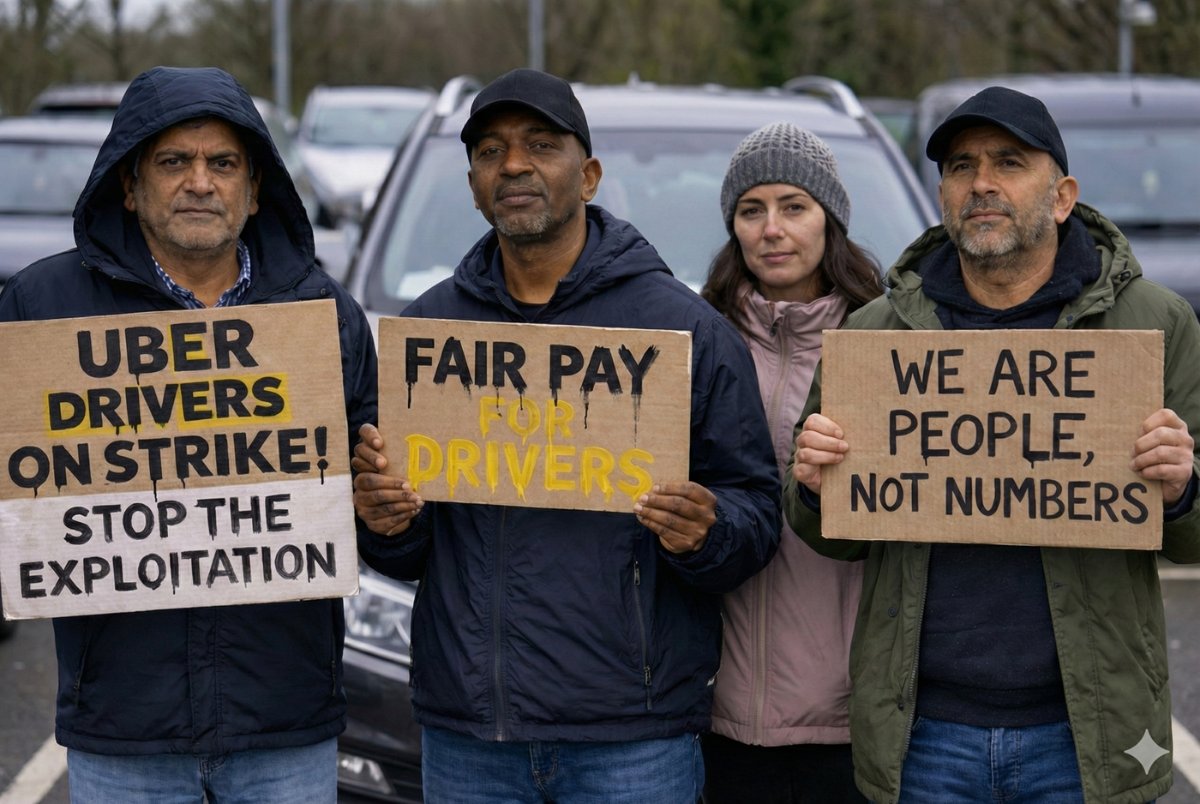
Uber Drivers Strike Over Pay Rates – What’s Really Going On?
UK Uber drivers have once again taken the difficult decision to stop working in protest over pay, allegedly linked to concerns over current fare rates and working conditions.
Drivers went on strike on 13 January, with a further strike planned for 16 January, as frustration over falling rates and working conditions continues to grow.
The message from organisers is clear and direct:
“Stop the exploitation.”
This is not a new issue. It’s one that many drivers say has been building for years.
Why are Uber drivers striking?
The following section reflects concerns raised by drivers and organisers. Claims are based on driver reports and public statements and are not allegations of wrongdoing stated as fact.
At the heart of the strikes is pay.
Many drivers say that:
- Per mile and per minute rates have not kept up with fuel, insurance, vehicle and maintenance costs
- Platform commissions feel higher while driver earnings feel lower
- Incentives and bonuses have become harder to achieve
- Drivers are expected to work longer hours just to earn the same money
For a lot of drivers, it no longer feels sustainable.
“Stop the exploitation” – what drivers mean
When organisers talk about exploitation, they are not just talking about one bad week or a slow month.
Drivers are talking about:
- Unpredictable income
- Long hours just to cover basic bill
Many drivers feel they are carrying all the risk, while having little control.
This isn’t just a money issue
Yes, pay matters. Drivers still have rent, mortgages, fuel, food and family responsibilities.
But drivers are also clear about something else:
👉 This is a mental health issue too.
Drivers regularly report:
- Stress about whether they’ll earn enough that week
- Anxiety when rates drop without warning
- Fatigue from working excessive hours
- Feeling undervalued or ignored
When income is unstable, mental health often follows.
Why strikes are happening more often
Striking is not easy for drivers.
If a driver doesn’t work, they don’t get paid. Many simply cannot afford time off.
That’s why repeated strike action usually signals deep frustration.
Drivers feel that:
- Previous complaints have not led to meaningful change
- Feedback channels are ineffective
- Public action is the only way left to be heard
What this means for passengers
Passengers may notice:
- Longer wait times
- Fewer available cars
- Higher surge pricing during strike periods
While this can be frustrating, many drivers hope the public understands why this is happening.
A system that pushes drivers to breaking point is not good for anyone in the long term.
A wider issue across the industry
Although this strike involves Uber drivers, the concerns are not unique to one platform.
Across taxi and private hire work, drivers are dealing with:
- Rising operating costs
- Increasing compliance and tax obligations
- Limited transparency around how fares are calculated
Where does this leave drivers?
For now, drivers are using collective action to send a message.
Whether platforms respond with meaningful changes remains to be seen.
What is clear is this:
- Drivers want fair pay
- Drivers want sustainable work
- Drivers want to be treated as humans, not numbers
Disclaimer
This article is written for informational purposes only.
The issues discussed reflect the views, experiences, and statements of drivers and organisers involved in the strike action. Any references to pay, treatment, or working conditions are alleged and based on driver reports, not independently verified claims.
UK Driver Hub does not represent Uber, its partners, or strike organisers, and takes no position for or against any industrial action.
Final thoughts
Strikes like these are rarely about one single decision or one bad week.
They are about years of pressure building up.
As the industry moves towards tighter regulation, Making Tax Digital, and higher running costs, the question becomes harder to ignore:
Can drivers realistically survive on current rates?
For many, the answer right now feels like no.