
Why Are Uber Drivers Being Called “Donkeys”?
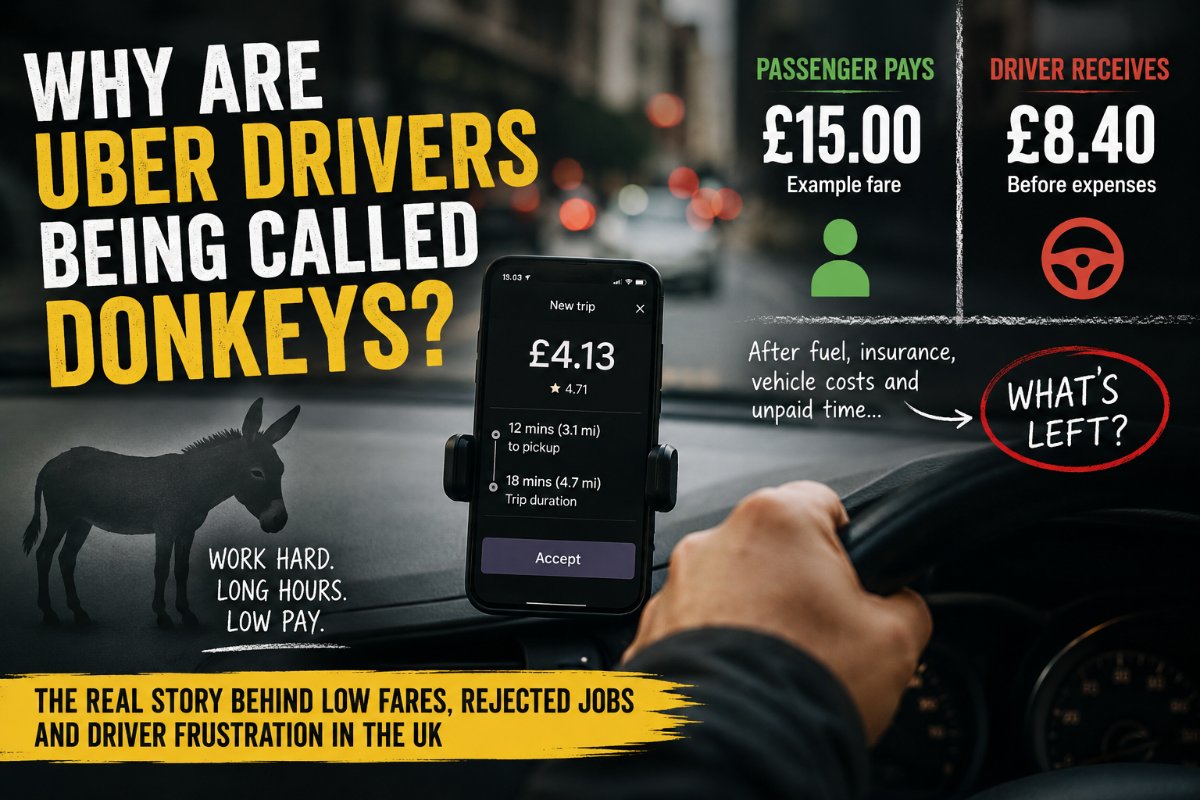
“£4.13 trip. Pickup 12 minutes away.”
Most drivers have seen requests like this appear on their screen and instantly thought:
“That’s not worth it.”
But eventually, somebody accepts it.
And that’s where the debate begins.
Over the last few years, a phrase has started appearing more and more in driver conversations, taxi ranks, WhatsApp groups, Facebook communities and TikTok videos:
“Uber donkey.”
Sometimes it’s used jokingly between drivers. Other times, it’s said with genuine frustration toward drivers who are seen as accepting jobs that don’t make financial sense.
But where did this term actually come from, and why has it become such a talking point across the ride-hailing industry?
It’s About More Than Just Insults
When drivers use the word “donkey,” they’re usually talking about the feeling of constantly working harder for less reward.
The comparison comes from the image of a donkey carrying heavy loads all day without much benefit for itself. Many drivers feel modern app-based driving can sometimes feel exactly like that:
long hours, rising costs, endless traffic and constant pressure to stay moving.
Drivers are responsible for:
- fuel or charging costs
- insurance
- vehicle finance or rental
- servicing and maintenance
- tyres
- cleaning
- unpaid waiting time
Meanwhile, fares often feel lower than they used to.
So when drivers say someone is “working like a donkey,” they’re usually expressing frustration about the economics of the job rather than attacking the individual personally.
The Real Frustration Starts With Rejected Jobs
One of the biggest sources of tension between drivers today is job acceptance.
A request appears.
Several drivers reject it because:
- The fare is too low
- The pickup is too far away
- traffic makes the trip unprofitable
- There’s little chance of a return fare
Then, eventually, another driver accepts it.
That’s when the arguments begin.
Some drivers believe accepting low-paying jobs damages earnings for everybody because it tells the platform that drivers are still willing to work for those rates.
Others see it differently.
For some drivers, earning something is still better than sitting idle. A driver renting a vehicle for hundreds of pounds a week may feel pressure to stay constantly active. A newer driver may not yet understand which trips are profitable long term. Part-time drivers may simply value keeping busy rather than calculating every mile.
Everyone’s situation is different, but the tension grows when drivers feel squeezed financially.
The Fare Gap That Frustrates Drivers
Another major reason this debate has intensified is the growing difference between what passengers pay and what drivers actually receive.
For example, a passenger may pay £15 for a trip, while the driver might receive £8 or £9 before expenses are deducted.
Passengers often assume drivers keep most of the fare, but many drivers say that simply isn’t the reality anymore.
Once drivers account for:
- fuel or electricity
- insurance
- wear and tear
- vehicle costs
- unpaid pickup time
some jobs can feel barely worthwhile financially.
A trip may involve:
- driving 10 minutes to the pickup
- waiting outside
- sitting in traffic
- completing the journey
- repositioning afterwards
all for what may end up being a relatively small profit.
This is one reason why low-paying requests create such emotional reactions among drivers online.
Drivers Are Starting To Think Like Businesses
Years ago, many drivers accepted almost every trip without thinking too deeply about profitability.
That mindset has changed.
Today, drivers analyse everything:
- distance to pickup
- traffic conditions
- time of day
- fuel costs
- likelihood of a return journey
- hourly earnings after expenses
A job that looks reasonable on paper may actually work out poorly once all the hidden costs are considered.
As a result, many experienced drivers have become far more selective.
Some now believe rejecting poor-paying trips is necessary to protect long-term earnings, while others still believe volume and consistency work better.
Neither side fully agrees with the other, which is why the conversation has become increasingly heated online.
Social Media Has Added Fuel To The Fire
TikTok, YouTube and Facebook driver groups have amplified the debate massively.
Videos showing:
- £3 fares
- long airport queues
- heavy traffic for low earnings
- screenshots of rejected jobs
regularly go viral among drivers.
Comments sections often become divided very quickly.
Some drivers accuse others of “accepting anything.”
Others respond by saying:
“Bills still need paying.”
That’s why emotions run high around this subject. Most drivers are not genuinely angry at each other personally. They’re frustrated with the wider pressures affecting the industry.
The Bigger Issue Behind The Debate
The truth is, this conversation probably wouldn’t exist if drivers felt properly rewarded.
When fares were stronger and margins were healthier, drivers cared far less about who accepted what.
But today, many drivers are facing:
- rising insurance costs
- expensive vehicle finance
- higher living expenses
- increased competition
- unpredictable earnings
As profitability becomes tighter, drivers naturally become more protective over which jobs they choose to accept.
That’s why the word “donkey” has stuck around.
For many drivers, it reflects a growing feeling that the job is becoming harder, more competitive and less sustainable than it once was.
Final Thoughts
Behind the jokes and arguments, there’s actually a serious discussion happening across the industry.
Drivers are trying to work out what sustainable earnings look like in modern ride-hailing.
Some reject low fares on principle.
Some accept them because they feel they have little choice.
Some focus on maximising profit.
Others focus on keeping busy and covering weekly costs.
But one thing is clear:
The growing tension between drivers says a lot about the financial pressure many people in the industry are currently facing.